
Oregon Court Records After Arrest
Oregon court records after a jail arrest are separate from jail custody records. A sheriff or regional jail books the person and may publish a roster entry. The prosecutor then decides what charges to file. Once filed, the case record lives in the Oregon court system, not the jail roster. The case may show a complaint, information, indictment, hearing dates, warrants, judgments, and later case activity.
A booking charge is not the same as a filed court charge. Booking data can be early, incomplete, or based on the arresting agency's initial allegation. Court records after an arrest show the formal case path. For current custody, use Oregon inmate records. For booking photos, use Oregon jail rosters and mugshots.
The Oregon Judicial Department Find a Case or Court Record page explains court-record access and OJCIN.
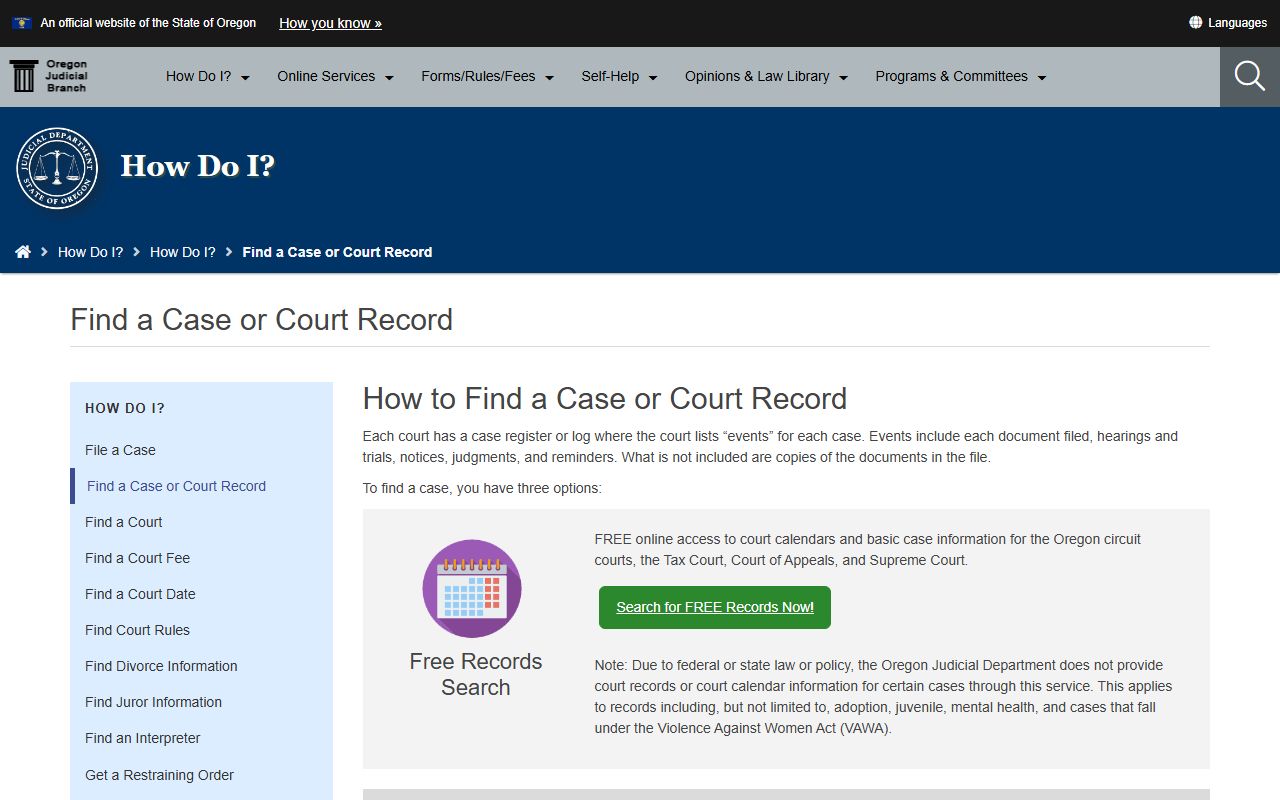
Use OJD tools for formal case data, then use jail, DOC, VISOR, BOP, or ICE tools for custody status.
Search Oregon Arrest Court Records
Oregon Judicial Department provides statewide access through records and calendar search tools and through OJCIN OnLine. The research says OJCIN is the Oregon Judicial Case Information Network and contains judgment dockets and the official Register of Actions from Oregon state courts, including trial, appellate, and tax courts. OJCIN OnLine is subscription-based. OJD also offers free online access to calendars and basic case information for Oregon circuit courts, Tax Court, Court of Appeals, and Supreme Court.
- Identify the county where the arrest, charging decision, or first appearance occurred.
- Use OJD records and calendar tools for free basic case and calendar information.
- Use OJCIN OnLine when subscription-level register-of-actions access is needed.
- Compare court charges with the jail roster because arrest charges can differ from filed charges.
- Use the locality directory if county-specific custody or court routing is needed.
The OJD records and calendar search page is the statewide court access hub for basic case and calendar information.
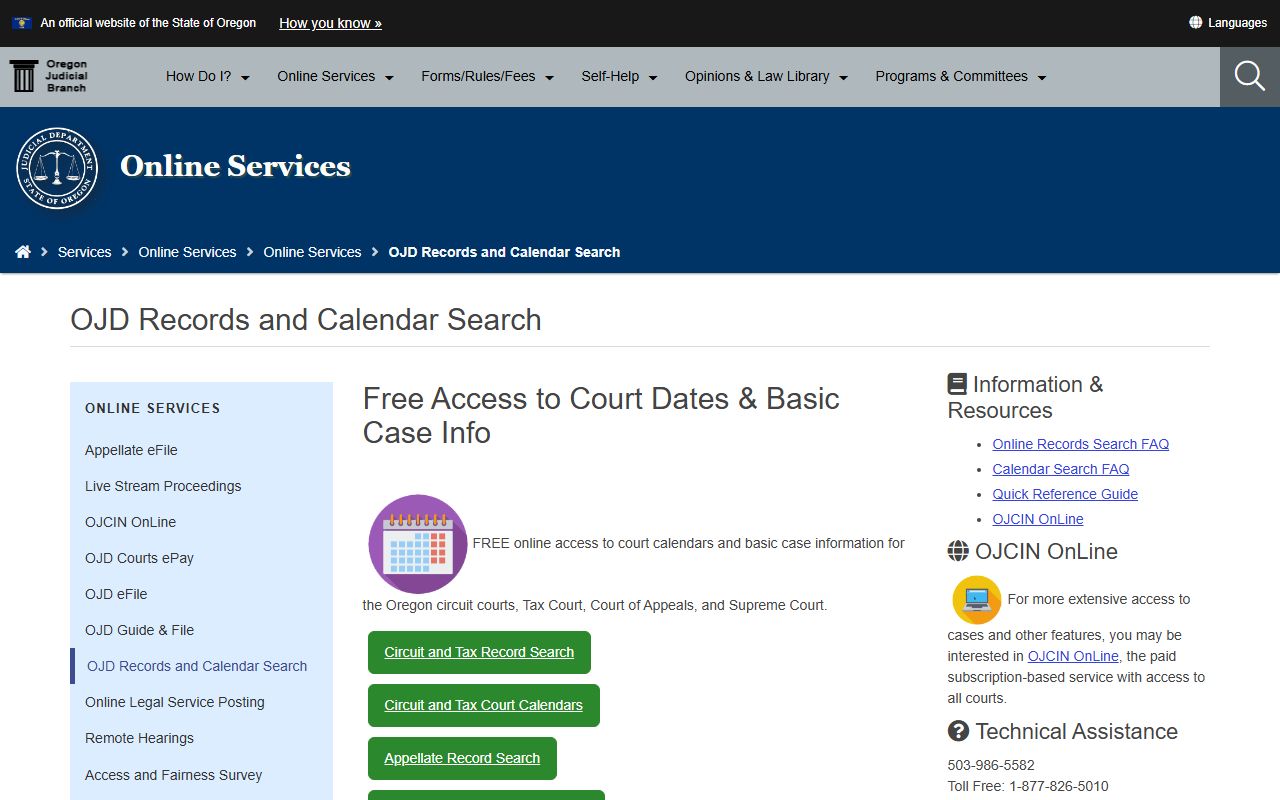
Calendar and case tools help confirm court events, but they do not replace the jail roster for current housing or release status.
Charges After an Oregon Arrest
After booking, the court record usually begins with a charging document. The research names complaint, information, and indictment as the main charge pathways. The label matters because it shows who filed the accusation and how the case entered court. It does not by itself prove guilt.
| Document | Common role | Plain meaning |
|---|---|---|
| Complaint | Initial charge document | Often starts a criminal case after arrest. |
| Information | Prosecutor-filed charge | Formal charging document filed by the prosecutor. |
| Indictment | Grand-jury charge | Formal charge returned through a grand jury process. |
Charge labels may be amended, added, reduced, dismissed, or resolved by plea or verdict. A jail roster may keep a booking charge label while the court docket shows a different final charge.
Oregon Charge Status
Charge status is the part of Oregon court records after arrest that readers often misread. A pending charge is an accusation. A dismissed charge is not a conviction. A reduced or amended charge may replace an earlier allegation. A conviction normally follows a plea, verdict, or judgment. Court records should be read with the current docket event and final disposition, not just the first arrest entry.
| Status | What it means |
|---|---|
| Pending | The case or charge is still active and unresolved. |
| Amended | The filed charge changed after the initial entry. |
| Dismissed | The charge was dropped by court order or prosecution action. |
| Convicted | The charge ended in a plea, verdict, or judgment of guilt. |
| Warrant or hold | A court or agency order may affect custody without proving a new conviction. |
OJD Search Fields
Oregon court-record searches are usually driven by defendant name, case number, court, and calendar date. OJCIN OnLine adds subscription access to the Register of Actions and judgment dockets from Oregon state courts. Free records and calendar tools can be enough for basic case status, but sealed, restricted, juvenile, and older records may not appear the same way online. If the issue is current custody, pair the court search with the county roster, DOC search, or VISOR.
| Search field | Use |
|---|---|
| Defendant name | Finds cases when the case number is not known. |
| Case number | Best for a known case after charges are filed. |
| Court or county | Narrows results to the court handling the case. |
| Calendar date | Finds hearings and appearances tied to a custody event. |
Court Records and Custody
Court records and custody records overlap but do not answer the same question. The jail roster may show a person in custody, bail status, holds, or release status. The court record may show first appearance, arraignment, hearing dates, filed charges, and judgments. Oregon DOC records may show a later prison transfer. VISOR may provide release or transfer notification across county and state custody.
The VISOR portal supports custody search and notifications that can be useful after a court event changes release or transfer status.
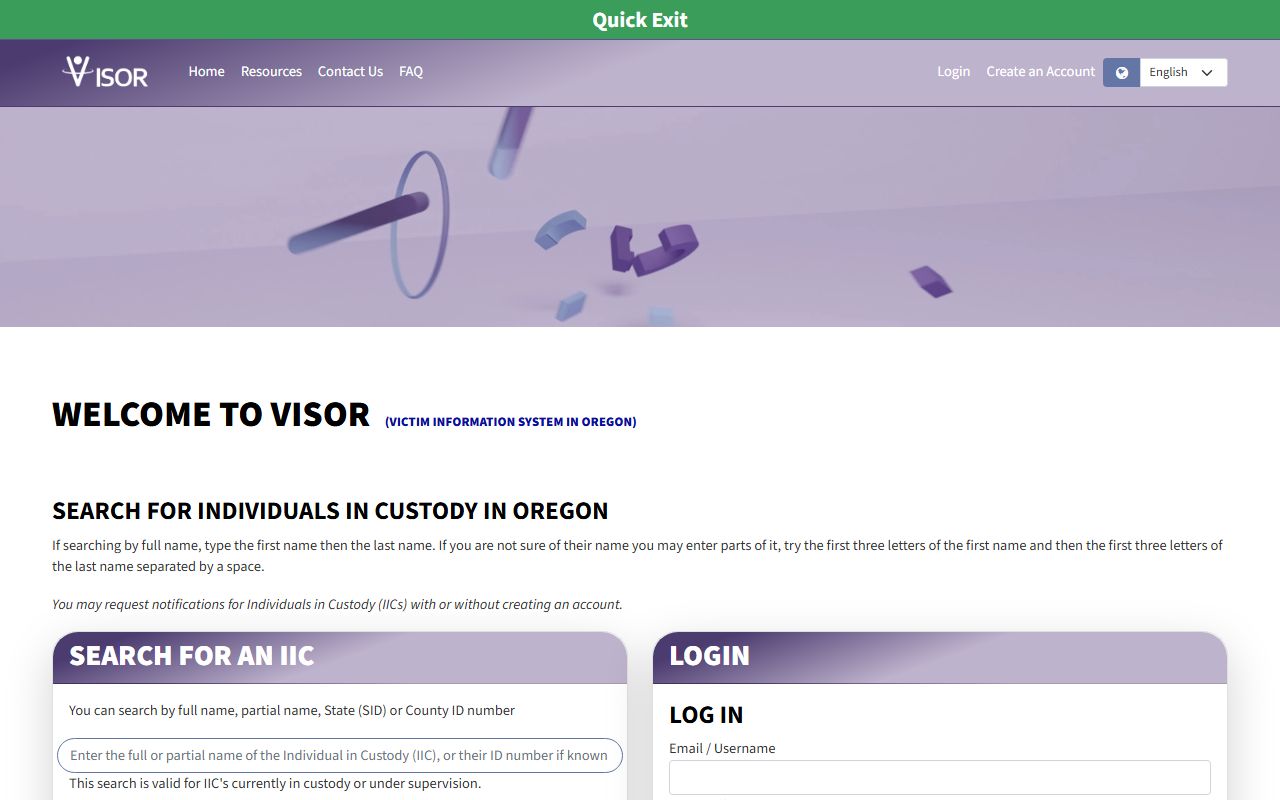
VISOR is best read beside the court docket, because a hearing result can affect custody before every roster or locator updates.
| Record | Shows | Does not prove |
|---|---|---|
| Jail roster | Custody, booking, local holds | Final court outcome |
| OJD case record | Filed charges, hearings, docket events | Current jail housing |
| DOC locator | State prison or offender status | New local arrest details |
| VISOR | Custody status and notifications | Certified court judgment |
Charges vs Convictions
An Oregon arrest is not a conviction. A charge is an allegation that has entered the court record. A conviction is the result of a guilty plea, verdict, or judgment. Court records after arrest should be read through that distinction, especially when the question involves background screening, employment, housing, licensing, or any regulated use. This site is not a consumer reporting agency and should not be used for FCRA-covered decisions.
| Charge | Conviction | |
|---|---|---|
| Stage | Accusation after arrest or filing | Final guilt finding or plea |
| Can change? | Yes, it may be amended or dismissed | May later be appealed, set aside, or otherwise affected by law |
| Custody link | May support jail hold or release conditions | May lead to sentence, supervision, or DOC transfer |
Restricted Oregon Arrest Records
Oregon court and arrest records can be sealed, expunged, redacted, confidential, or restricted. Juvenile records are especially sensitive. OYA youth custody is not an adult public roster target. Dismissed charges, eligible arrests, and some case records may be treated differently from convictions. Public-records law also includes exemptions and redaction duties, so not every file connected to a jail arrest is open online.
Important: Court-record visibility does not make a record suitable for employment, housing, credit, insurance, or other FCRA-covered screening.
Official Oregon Court Records
When a court record must be official, use the Oregon court system or the court that holds the case. A screenshot, jail roster, or third-party search result is not a certified judgment or complete court file. Oregon public-records law also routes records to the public body that has custody of the record. For jail records, that can be the sheriff or regional jail. For court records, it is OJD or the court. For DOC records, it is the DOC Public Records Center.
The Oregon DOC Public Records Center is relevant when the court result led to state prison custody and DOC records are needed.
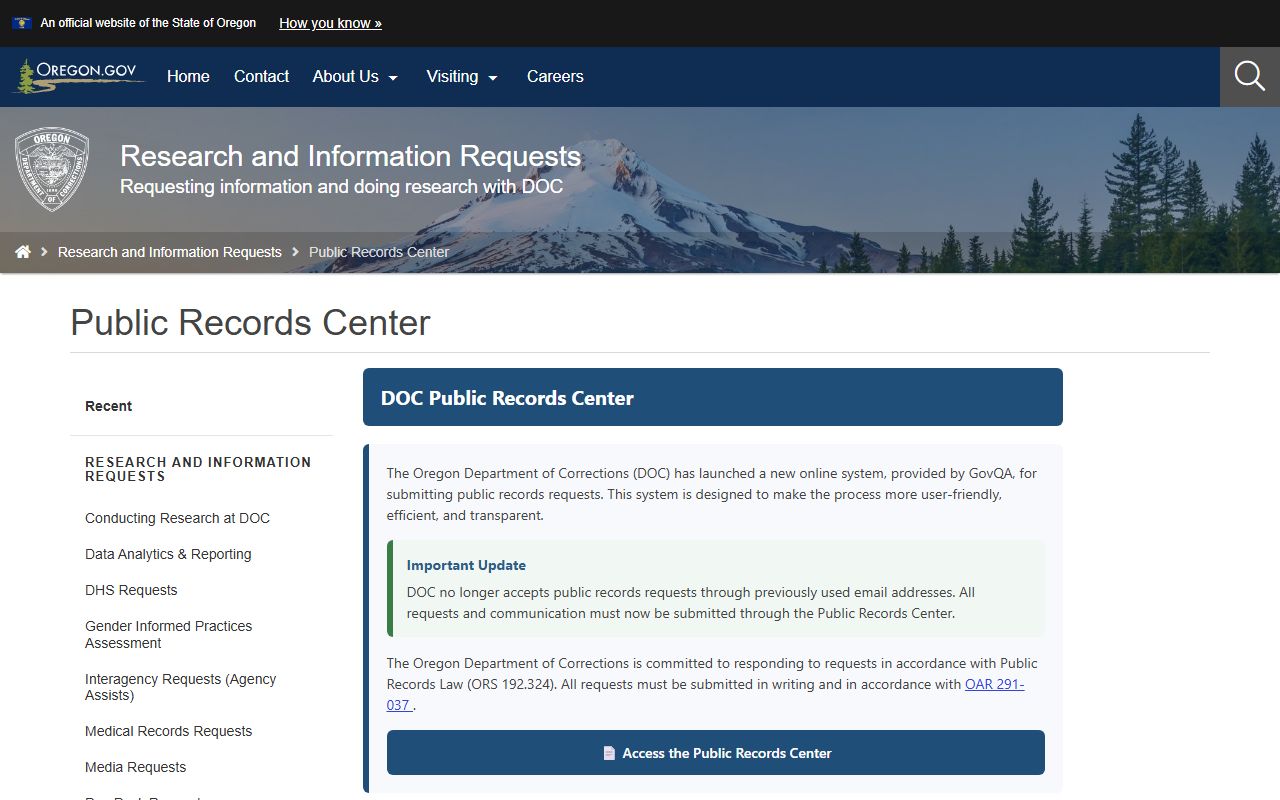
Request the record from the agency that created or holds it, because no single Oregon portal certifies every jail, court, and prison document.
Oregon Public Records Limits
ORS chapter 192 governs Oregon public-records access, but it does not make every arrest-related record instantly public online. Exemptions, redactions, juvenile confidentiality, sealed records, ongoing investigations, and special statutes can limit what is shown. A court calendar may be public while a supporting police report is not. A jail roster may show custody while the court case has not yet been filed. A DOC record may show prison custody after the county case ends. The correct request path depends on the record custodian.
Public Record Search
Sponsored Results